Introduction
Every homeowner knows the sound: that sharp, persistent squeak that announces every trip to the kitchen or bathroom. Squeaky door hinges are one of the most common household irritations, developing gradually as friction increases between moving metal parts. According to research on hinge mechanics, squeaking is primarily caused by stick-slip friction between dry metal surfaces, worsened by dried-out factory lubricant, dirt accumulation, and misalignment.
Nearly all squeaky hinges can be fixed in under 30 minutes without professional help. This guide covers:
- Why hinges squeak and how to diagnose the root cause
- Step-by-step fixes using household items or specialty lubricants
- When replacement makes more sense than repair
- How to prevent squeaks from returning
TL;DR
- Squeaks come from friction — usually dry hinges, dirt buildup, loose screws, or a bent pin
- Fixes typically take under 30 minutes using household items like soap or petroleum jelly, or silicone spray
- Always clean the hinge pin and barrel before lubricating, then reassemble
- Replace hinges when visibly bent, rusted through, or squeaking persists after repeated treatments
- Call a professional only if squeaking comes with door misalignment or sagging — not for squeaks alone
What Makes Door Hinges Squeak?
How a Hinge Works
A door hinge consists of two metal leaves joined by a pin rotating inside a knuckle barrel. When anything disrupts smooth movement between these parts, friction creates noise. Stick-slip behavior occurs primarily in the boundary and mixed lubrication regimes, which is exactly the lubrication mode present in residential door hinges.
Primary Causes of Squeaking
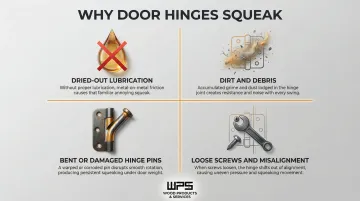
Most squeaks trace back to one of four problems:
- Dried-out lubrication — Factory lubricant breaks down over time, leaving metal grinding against metal. Manufacturers like Hager ship residential hinges without lubrication and recommend lubricating after installation.
- Dirt and debris inside the knuckle — Dust, paint overspray, and rust particles obstruct the pin's rotation and amplify friction noise.
- Bent or damaged hinge pins — Pins warped from heavy use or improper removal rub unevenly against the knuckle walls, producing sharp squeaks rather than soft creaks.
- Loose screws and misalignment — A shifting hinge plate lets the door rub against the frame. This wood-on-wood contact can mimic a hinge squeak but originates elsewhere.
Consequences of Ignoring Squeaks
A squeak that goes unaddressed tends to get worse. Left alone, it can cause:
- Accelerated wear on metal surfaces
- Stripped screw holes from the hinge shifting under load
- Door sagging that prevents proper latching
- Higher repair costs from compounding damage
How to Fix Squeaky Door Hinges (Step-by-Step)
Before applying lubricant, identify which hinge is squeaking. Open and close the door slowly while listening closely—most doors have 2-3 hinges, but usually only one makes noise.
Step 1: Clean the Hinge First
Cleaning before lubricating is critical. Trapped dirt under fresh lubricant causes faster re-squeaking.
Remove the hinge pin:
- Close the door to stabilize the hinge
- Place a nail or punch at the pin's base
- Tap upward with a hammer until the pin head emerges (see Tap upward with a hammer until the pin head emerges (see The Hinge Journal's removal guide for reference)
- If stuck, lift the door handle slightly to relieve pressure
Clean thoroughly:
- Scrub the pin with steel wool using circular motions
- Remove rust, dried paint, and debris completely
- Wipe the inside of the knuckle barrel with a cloth or cotton swab
Step 2: Apply Lubricant and Reassemble
- Coat the cleaned pin with your chosen lubricant
- Reinsert the pin carefully by hand into the top hole
- Tap it with a hammer until fully seated through the hinge knuckles (Bob Vila's squeaky door guide walks through this in detail)
- Open and close the door several times immediately—this works lubricant into tight spaces and confirms the squeak is gone
Step 3: Tighten Loose Screws
If squeaking persists after lubrication, check every screw on the hinge plate. A loose screw allows the plate to shift, causing binding.
For stripped screw holes:
- Dip wooden toothpicks in wood glue and pack them tightly into the hole (Family Handyman's guide to fixing stripped screw holes covers this thoroughly)
- Let dry, trim flush, drill a new pilot hole
- Reinsert the screw
Step 4: Test and Confirm the Fix
- Open and close the door slowly, quickly, and at different angles
- Check for any remaining noise
- Wipe away excess lubricant from surfaces to prevent staining or dust attraction
Best Lubricants for Squeaky Door Hinges
The right lubricant balances effectiveness, ease of application, and longevity. Your choice depends on what's available and how long you want the fix to last.
Top Recommendation: Silicone Spray or Dry Lubricant
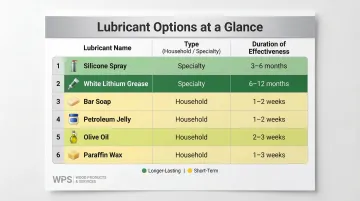
Silicone spray lasts 3-6 months and offers the best balance for interior doors:
- Applies cleanly with no dripping
- Won't attract dust or grime
- Safe for painted hinges
- Minimal mess
White lithium grease lasts even longer (6-12 months) but is better for exterior or heavy-use doors due to higher mess levels.
Household Alternatives That Work
Without specialty products on hand:
- Rub bar soap directly on the pin — fat content lubricates for 1-2 weeks
- Coat the pin with petroleum jelly for 1-2 weeks (effective but messy)
- Dab olive oil into the barrel with a cotton swab; lasts 2-3 weeks but oxidizes and gums up over time
- Melt paraffin wax slightly and rub onto the pin for 1-3 weeks of relief
The WD-40 Clarification
WD-40 Multi-Use Product is primarily a water displacer and penetrant, not a long-term lubricant. It provides only 2-4 weeks of temporary relief before drying out. Use it to clean and displace moisture first, then follow up with a proper lubricant. For lasting results, WD-40 Specialist products — White Lithium Grease or Dry Lube with PTFE — are the better choice.
What to Avoid
- Cooking sprays form sticky residue that attracts dust
- Over-application of any liquid lubricant causes drips that stain wood floors and door frames
- Never apply lubricant without cleaning first—you'll trap abrasive dirt particles
When Should You Fix vs. Replace Your Door Hinges?
Most squeaky hinges can be fixed without replacement, but clear signs indicate when repair no longer makes sense.
Fix the Hinge When:
- The squeak is new or intermittent
- The pin is clean and straight
- Hinge plates sit flat and screws hold firmly
- Lubrication or tightening eliminates the noise during testing
This describes the majority of squeaky hinge cases.
Replace the Hinge When:
- The pin is visibly bent or corroded beyond cleaning
- The knuckle is cracked or deformed
- Screw holes are stripped and the hinge won't stay flush
- The finish is worn and mismatches updated room hardware
- The squeak returns within days after repeated lubrication attempts
The average lifetime for a door hinge is 10-15 years under normal conditions, so replacement is inevitable at some point.
Cabinet Hinges in High-Moisture Areas
Kitchen and bathroom cabinet hinges face unique challenges. High humidity accelerates corrosion, and frequent use wears components faster. Premium concealed hinges like Blum are tested to 200,000 cycles, but moisture exposure can shorten that lifespan.
If cabinet hinges squeak persistently or doors droop, replacement with corrosion-resistant hardware is the better long-term solution. If you're already at that point, a cabinet renovation may be worth considering — Quality Made Cabinets designs and installs custom kitchen and bathroom cabinetry with hardware specified for the environment, so persistent hinge issues don't resurface after the job is done.
Common Mistakes to Avoid and How to Prevent Future Squeaks
Mistakes That Make Squeaks Return Faster
- Lubricating without cleaning first traps dirt under the coating, causing faster re-squeaking than no lubricant at all
- Relying on WD-40 long-term doesn't hold — it's a cleaner, not a lubricant, and squeaks return within weeks
- Treating the pin while ignoring loose screws leaves the root cause of misalignment unresolved
Preventive Care Routine
Build hinge lubrication into your regular home maintenance schedule:
- Lubricate all hinges every 6–12 months — the whole process takes under 10 minutes and prevents squeaks before they start
- In high-traffic areas or near the coast, increase to every 3–6 months
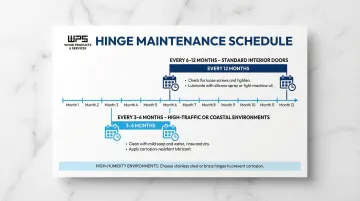
Humidity is one factor worth planning around separately, especially in certain rooms or climates.
Long-Term Considerations for High-Humidity Areas
In bathrooms, kitchens, or coastal climates:
- Choose stainless steel (304 or 316) or solid brass hinges that resist corrosion
- Inspect weatherstripping annually—worn stripping creates door-frame friction that mimics hinge squeaks
- Consider that wood doors can swell in humid environments, causing binding that sounds like squeaking but originates from wood expansion
Frequently Asked Questions
Why does my door make noise when I open and close it?
Noise when opening and closing is almost always caused by friction—either between the hinge pin and knuckle due to lack of lubrication or debris buildup, or between the door edge and frame due to loose screws or wood swelling. Cleaning and lubricating the hinges resolves the majority of cases.
What is the best lubricant for squeaky door hinges?
Silicone spray or dry lubricant is the best option because it lasts 3-6 months, doesn't drip onto surfaces, and doesn't attract dust. Petroleum jelly and bar soap are effective household alternatives for quick fixes when specialty products aren't available.
Can I fix a squeaky hinge without removing the pin?
In mild cases, applying lubricant directly into the gap at the top of the hinge while opening and closing the door can work temporarily. However, removing and cleaning the pin gives a more thorough, longer-lasting result, especially if rust or grime has accumulated inside the barrel.
How long does lubricant last on door hinges?
Silicone spray or dry lubricant typically lasts 6-12 months under normal use before reapplication is needed. Household options like soap or olive oil may last only a few weeks, particularly on high-traffic doors that open and close many times daily.
When should I replace my door hinges instead of lubricating them?
Replace hinges when the pin is bent, the knuckle is cracked or corroded, the screw holes are stripped, or the hinge continues squeaking after cleaning and lubricating. Repeated squeaking after multiple treatments means the hinge has worn beyond repair.
Do squeaky hinges mean something is wrong with my door?
Most squeaks mean the hinge needs lubrication or cleaning—not structural damage. However, if the door also sticks, fails to latch, or visibly sags, that may point to loose hinges, a warped door, or house settling worth a closer look.
Planning a kitchen or bathroom upgrade in the Green Lane, PA area? Quality Made Cabinets designs and installs custom cabinetry for residential and commercial clients. Call (484) 719-8209 or email kitchentransformations@yahoo.com to schedule your free consultation.