TL;DR
- A double vanity features two sinks on a shared cabinet structure—ideal for couples, families, or anyone who wants more space
- Design ideas range from floating and industrial to wood-and-stone, marble, and bold color statements
- Your bathroom size, personal style, and daily habits should all shape your final design choice
- Custom cabinetry offers the most flexibility, with no restrictions on widths, finishes, or layout
Why a Double Vanity Is Worth the Investment
A double vanity is a bathroom unit with two sinks and shared or paired cabinetry, typically starting at 60 inches wide. According to 2025 Zillow and Houzz survey data, 72% of buyers want a double vanity — even in smaller bathrooms.
The numbers back it up: 92% of dual-income households rank a double vanity among the most worthwhile home upgrades, and 68% of couples report fewer morning conflicts after installation.
Day-to-day, the practical gains are hard to ignore:
- Two people can use the vanity simultaneously without crowding
- Dramatically increased cabinet and drawer storage compared to single-sink units
- Dedicated personal space for each user—no more fighting over counter territory
Those functional wins also translate to real design impact. A well-chosen double vanity becomes the bathroom's focal point — giving the room a finished, cohesive look that single-sink setups rarely achieve. And if resale is on your radar, minor bathroom upgrades including vanity replacements can boost resale value by up to $12,000.

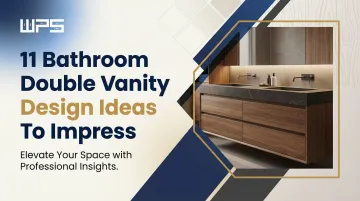
11 Bathroom Double Vanity Design Ideas to Impress
These 11 ideas cover a wide range of styles and budgets. Whether you're working with a compact primary bathroom or a spacious ensuite, each concept can be scaled with the right planning and cabinet choices.
Floating Wall-Mounted Vanity
A cabinet attached to the wall with no floor contact keeps the floor fully visible and creates an illusion of more space. Wall-mounted vanities pair beautifully with vessel sinks and chrome or matte black hardware.
Why it works: Ideal for smaller bathrooms where visual breathing room matters. The continuous floor line creates an uninterrupted visual flow that makes compact bathrooms appear larger and enhances spatial perception. Plus, it makes floor cleaning significantly easier.
Installation note: Proper wall anchoring is essential. This style requires solid wood blocking—typically doubled-up 2x6 or 2x8 boards—installed between wall studs, secured with heavy-duty 5/16-inch lag screws with washers. For heavy stone countertops, additional steel brackets rated for 330 lbs or more are required.
Industrial-Style Double Vanity
Distressed or dark-stained wood paired with black metal hardware, rubbed bronze faucets, and exposed pipe-style fixtures gives the bathroom raw, factory-inspired character.
Best for: Homes with an eclectic, loft, or rustic aesthetic. This style lands best when the rest of the bathroom carries through with concrete-look tile or dark grout lines. A few details that define the look:
- Matte black cabinet pulls and pipe-style faucets
- Dark-stained or reclaimed wood cabinet bases
- Concrete or slate-effect floor tile for cohesion
- Exposed plumbing as a deliberate design element
Warm Wood and Stone Combination
A solid wood cabinet base—walnut, oak, or birch-reeded—paired with a white quartz or natural marble countertop creates contemporary yet inviting warmth. Brushed brass faucets and stone sconces complete the look.
Why it works: The contrast of warm wood grain against cool stone delivers a balanced, high-end aesthetic that holds its appeal across design styles. This combination works across design styles from transitional to modern farmhouse.
Maintenance tip: Seal both materials properly to protect against moisture. Wood cabinets benefit from protective coatings specifically engineered for humid bathroom environments, while natural stone countertops require regular application of impregnating sealers to resist stains.
All-Marble or Cultured Stone Vanity
A unified marble or cultured stone surface covering both the countertop and integrated sinks creates a cohesive, high-end appearance. Vein patterns flow continuously across the surface. Navy, white, or charcoal cabinet bases pair well.
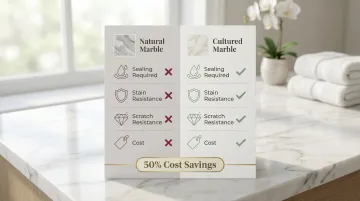
Why it works: Delivers a timeless, spa-like aesthetic that holds its appeal across design trend cycles. Cultured marble is a lower-maintenance, more affordable alternative to natural stone—it's non-porous, requires zero sealing, and costs nearly 50% less than natural marble countertops.
| Feature | Natural Marble | Cultured Marble |
|---|---|---|
| Sealing Required | Yes, regularly | No |
| Stain Resistance | Low (porous) | High (non-porous) |
| Scratch Resistance | Low | High |
| Cost | Premium | Budget-friendly |
Integrated Sink and Countertop
A seamless, one-piece countertop and sink unit made from solid surface, acrylic, or ceramic eliminates visible seams between the sink bowl and counter surface.
Why it works: Eliminates grout lines and crevices where grime accumulates, making it the easiest double vanity design to keep clean. Non-porous, seamless materials prevent moisture, mold, and bacteria from collecting in joints.
Solid surface materials are also repairable—minor scratches can be buffed out by homeowners using mild abrasive cleansers and a Scotch-Brite pad.
Open Shelving Double Vanity
Lower cabinet doors are replaced with open shelves. Wicker baskets, rolled towels, or decorative bins sit on display beneath the countertop.
Why it works: Makes the bathroom feel larger and more relaxed, suited to coastal, farmhouse, or casual aesthetic homes. The visual lightness of open shelving creates breathing room in compact spaces.
Trade-off: Requires more intentional organization to avoid a cluttered appearance. Everything stored beneath the counter will be visible, so decorative storage solutions are essential.
Bold Color Statement Vanity
A double vanity painted or finished in a deep, saturated hue—cobalt blue, forest green, navy, or sage—with simple chrome or brass hardware to ground it.
Why it works: Color on cabinetry is one of the most affordable ways to make a dramatic design impact. A bold vanity becomes the bathroom's focal point without requiring expensive materials or intricate detailing.
Design tip: Pair a bold vanity with neutral walls and floors to keep the space balanced rather than overwhelming. Let the vanity be the star, with everything else playing a supporting role.
Couples' Vanity with Dedicated Zones
A single vanity unit with clearly defined left and right sides—distinct mirrors (or a divided mirror panel), individual sets of drawers, and separate faucet and fixture styles for each person if desired.
The appeal: Removes the friction of a shared getting-ready routine. Each person has their own territory, drawers, and counter space. Fluted cabinet inlays, arched mirrors, and brass sconces are current design favorites for this style. You can even carve out a seated makeup area on one side for added luxury.
Mix-and-Match Base and Top
A Shaker-style or flat-panel painted base in a neutral—gray, white, or greige—topped with a contrasting material like thick marble slab, butcher block, or quartz with a bold vein pattern.
Why it works: Gives homeowners the flexibility to upgrade components at different times and lets them personalize the design without committing to a fully custom build. Polished nickel or matte black hardware unifies the mix effectively, creating cohesion between the separate elements.
Backlit Mirror Double Vanity
Two backlit LED mirrors mounted above a clean-lined double vanity. The glow emanates from behind the mirror surface, reducing harsh shadows on the face.
Why it works: Backlit mirrors serve double duty—eliminating the need for wall-mounted sconces while providing even, flattering task lighting. The soft glow adds a modern, hotel-like quality that's genuinely useful for grooming, not just decorative.
Separate Dual Vanities with Middle Storage
Two individual vanity units placed on opposite sides or flanking a central cabinet or tower unit—creating two fully independent getting-ready stations within a single bathroom.
Why it works: Requires a larger bathroom footprint (typically 10+ feet of wall space), but delivers maximum personal space for both users. The middle zone can hold a countertop cabinet, open shelving, or a decorative stool for seating. This configuration works best in primary bathrooms where square footage allows for generous spacing.
How to Choose the Right Double Vanity Design for Your Bathroom
Start with Your Bathroom's Dimensions
According to the National Kitchen and Bath Association (NKBA), the minimum recommended width for a double vanity is 60 inches, which allows two sinks to fit while maintaining the code-required 30 inches center-to-center between fixtures. However, 72 inches provides more comfortable counter space per person and allows room for a central drawer stack.
Measuring your space:
- Measure available wall space from edge to edge
- Account for door swing clearance—doors must not interfere with vanity use
- Ensure at least 15 inches from the toilet centerline to any vanity edge (18 inches is recommended)
- Plan for 21 inches minimum (30 inches recommended) of clear floor space in front of the vanity
Match the Design to Your Existing Style
Your vanity style should follow the room — and the rest of the home:
- Modern spaces: Floating and integrated-sink designs feel at home. Lean on clean lines, minimal hardware, and monochromatic palettes.
- Traditional or transitional spaces: Wood-and-stone combinations or Shaker-style doors with brass hardware create warmth without feeling dated.
Keep faucets, drawer pulls, and mirror frames consistent across the vanity. Mixing finishes can work — brass and matte black is a popular pairing — but unintentional mismatches will undercut an otherwise polished result.
Work with a Custom Cabinet Maker for Perfect Fit
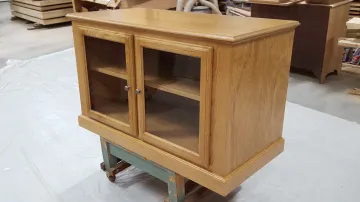
Working with a custom cabinet maker like Quality Made Cabinets lets homeowners move past standard dimensions and generic finishes. You get a vanity built to your exact wall width, preferred wood species, and drawer configuration — which matters most in bathrooms with non-standard layouts or when a specific look doesn't exist off the shelf.
Quality Made Cabinets builds custom vanity cabinets using plywood and hardwood components with finishes suited to humid bathroom conditions. The process includes in-home consultations, precise measurements, and 3D design previews so you can see your space before production starts.
Conclusion
A double vanity transforms both the function and the feel of a primary bathroom. The 11 ideas above cover the full spectrum from minimalist floating units to bold, custom-color statement pieces. The right design is the one that fits your space, matches how you actually use the bathroom, and holds up over time.
If you've found a design that resonates but aren't sure how to bring it to life, Quality Made Cabinets builds custom vanity cabinets to your exact specifications, from wood species and finish to drawer configuration and dimensions. Reach out at (484) 719-8209 or stop by Quality Made Cabinets at 4099 Commerce Dr, Green Lane, PA 18054 to talk through your project.
Frequently Asked Questions
How much does it cost to replace a double vanity?
The average cost to replace a double vanity ranges from $1,500 to $1,983, including materials and labor. Custom luxury builds can exceed $4,000. If you're converting from a single sink to a double sink, plumbing adjustments add $400 to $2,200 to the total cost.
Can you convert a single-sink vanity into a double vanity?
Yes, but it requires sufficient wall space, updated supply lines, and drain reconfiguration. Hiring a licensed plumber is highly recommended to handle venting and code compliance correctly.
How long should a vanity be for two sinks?
60 inches is the standard minimum width for a double vanity, maintaining the 30-inch center-to-center spacing required by code. However, 72 inches or more is preferred for comfortable use by two people with adequate counter space between sinks and room for a central drawer stack.
Is it better to have a single sink or a double sink?
Double sinks work best for couples or families sharing a bathroom—they eliminate morning bottlenecks and give each person their own space. Single sinks suit solo users or smaller bathrooms where counter space matters more than capacity.
What can I put in between two bathroom vanities?
Good options include a countertop storage tower, a seating bench, open shelving for towels, or a framed piece of art. Each visually connects the two units while adding storage or function to the space between them.
How much space should be between a bathroom vanity and a toilet?
According to the 2024 International Residential Code (IRC), building codes require at least 15 inches from the toilet centerline to any obstruction. The NKBA recommends 18 inches for comfortable use and adequate maneuverability when seated.