Introduction
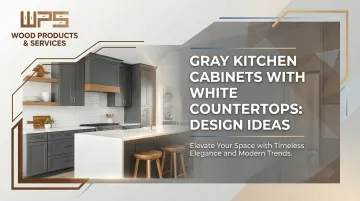
Gray cabinets paired with white countertops rank among the most searched kitchen color combinations—and for good reason. This pairing delivers both sophistication and approachability, working across modern, farmhouse, transitional, and traditional styles. Unlike stark white kitchens that can feel sterile, or dark kitchens that risk feeling heavy, gray and white strike a balanced middle ground that feels elevated yet livable.
The numbers back up the appeal. According to the National Association of Realtors' 2025 Remodeling Impact Report, kitchen upgrades earn a 9.7/10 "Joy Score" and recover approximately 60% of costs at resale. A timeless gray-and-white palette appeals to the broadest buyer pool while creating a kitchen you'll genuinely enjoy every day.
Making that happen requires the right decisions at every step. This guide covers how to choose the right shade of gray for your space, which design styles suit this combination best, and which white countertop materials, hardware finishes, and backsplash choices pull the whole look together.
TLDR
- Gray cabinet shades range from pale silver to deep charcoal, each creating a distinct mood based on your kitchen's size and light
- White countertops in marble, quartz, or granite differ in durability, upkeep, and visual character
- Hardware and backsplash define the style: brass reads luxurious, matte black reads modern, wood tones add warmth
- This combo suits nearly every design style and remains a high-resale-value choice for homeowners
- Undertones matter—cool gray pairs best with bright white, while warm gray works better with cream or off-white countertops
Why Gray Cabinets with White Countertops Work So Well Together
The design principle here is simple but powerful: gray acts as a sophisticated neutral that visually recedes, while white countertops reflect light and create contrast. Together, they prevent the kitchen from feeling flat or one-dimensional. Light Reflectance Value (LRV) explains why this works — white surfaces have high LRVs (82–100), bouncing light around the room to make spaces feel expansive, while mid-to-dark grays have lower LRVs, grounding the space without overwhelming it.
Both colors accommodate a wide range of undertones. Warm grays with beige or brown undertones pair beautifully with creamy off-whites, creating a cozy, inviting atmosphere. Cool grays with blue or purple undertones complement bright, crisp whites for a modern, clean aesthetic.
That flexibility is what makes this pairing so durable across home styles and lighting conditions — from sun-drenched southern exposures to softer northern light.
The combination also holds up in everyday use:
- Matte and satin gray finishes hide fingerprints and smudges better than high-gloss or stark white surfaces, making them a smart choice for busy kitchens
- White countertops keep the space feeling clean and open, preventing the heavier look that darker counters can create
- The contrast between cabinet and surface draws the eye upward, making even compact kitchens feel more spacious
How to Choose the Right Shade of Gray for Your Kitchen
The Gray Spectrum: Light, Medium, and Dark
Gray isn't a single color—it's a spectrum. Light grays (pale silver, greige, soft ash) feel airy and open, making small kitchens feel larger. Medium grays (true mid-tone, warm clay-gray) offer versatility and richness without drama. Dark grays (charcoal, near-black slate) create bold, luxurious statements but require sufficient space and natural light to avoid feeling oppressive.
Understanding Undertones
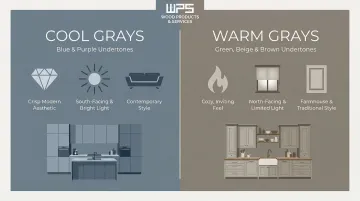
Undertones change everything. Two undertone families dominate gray cabinetry:
- Cool grays (blue or purple undertones) feel crisp and modern — a natural fit for contemporary kitchens with south-facing windows and strong sunlight
- Warm grays (green, beige, or brown undertones) feel cozy and inviting, working well in traditional or farmhouse spaces, especially with northern exposure or limited natural light
Pro tip: Test undertones by placing large paint swatches on your kitchen walls and observing them under your specific lighting—morning light, midday sun, and evening artificial light—before committing. Gray can shift noticeably across lighting conditions.
Room Size and Natural Light Matter
Small or low-light kitchens benefit from lighter grays that reflect available light, making the space feel larger and brighter. Large kitchens with generous windows can carry dark, dramatic tones without feeling cramped. Window size also impacts perception—a kitchen with a single small window needs lighter cabinets than one with floor-to-ceiling glass.
The Two-Tone Approach
Nearly 24% of renovating homeowners choose two-tone cabinetry, typically using gray base cabinets paired with white or lighter upper cabinets. This configuration adds visual height, prevents the kitchen from feeling heavy, and offers a practical compromise for those who love gray but are cautious about committing fully.
Getting the two-tone balance right is where custom cabinet work makes a real difference. Quality Made Cabinets can match gray finishes to a homeowner's exact specifications, so the shade coordinates with countertop stone, flooring, and lighting rather than simply defaulting to whatever stock options are available.
Design Ideas: 6 Styles That Work Beautifully with Gray Cabinets and White Countertops
Design Ideas: 5 Styles That Work Beautifully with Gray Cabinets and White Countertops
Gray and white serve as an adaptable canvas. The style direction is determined almost entirely by supporting details: hardware, materials, and layout. Here are five proven approaches.
Modern and Contemporary
Flat-panel or slab-style gray cabinets in medium to dark tones pair with white quartz countertops, stainless steel or matte black appliances, and integrated or minimalist hardware. The result is sleek and uncluttered — no ornamental details competing for attention, just clean material contrast. Matte finishes outperform high-gloss here for a low-maintenance look that hides fingerprints and daily wear.
Farmhouse and Transitional
The Look: Shaker-style gray cabinets in soft or warm gray tones, white marble or granite countertops, a farmhouse sink, and warm-toned hardware like brushed brass or oil-rubbed bronze.
Why It Works: Open shelving and wood accents soften the gray, preventing the space from feeling cold. The shaker profile adds just enough detail without overwhelming, while warm hardware introduces a lived-in, inviting quality.
Coastal and Scandinavian
Pale or blue-tinted gray cabinets, bright white countertops, light wood floors, and natural material accents like rattan or linen create an airy, light-filled kitchen that feels relaxed and effortless. The pale gray reads almost neutral, letting natural light bounce freely throughout the space.
Bold and Dramatic (Dark Gray)
The Look: Near-black charcoal cabinets paired with bright white marble or quartz countertops for high contrast, amplified by gold or brass hardware.
Why It Works: The stark contrast creates a luxurious, gallery-like effect. This approach works especially well in larger kitchens with good natural light and high ceilings, where the dark cabinets ground the space rather than shrink it.
Two-Tone with a Gray Island
White upper and perimeter cabinets with a gray island — or the reverse — give you contrast without committing to gray throughout. The island becomes a natural focal point, making this the ideal entry point for anyone who wants to introduce the color without going all in.
White Countertop Materials: Which One Is Right for Your Gray Cabinets?
Marble
White marble—particularly Calacatta and Statuario varieties—features characteristic gray veining that creates a seamless, luxurious look against gray cabinets. The veining pattern naturally complements the cabinet color, unifying the palette.
Marble is a porous natural stone that requires sealing every 6 to 12 months. One thing to know upfront: sealers protect against staining but do not prevent acid etching—the dull spots left by lemon juice, wine, or vinegar. This makes marble best suited for homeowners who embrace patina or stay on top of spill cleanup.
Best For: Traditional, farmhouse, and transitional styles where the natural veining and aging process are part of the appeal.
Quartz
Engineered quartz offers a wide range of white options from pure bright white to soft off-white with subtle veining. Many quartz patterns convincingly mimic Calacatta marble's veining with the advantage of consistency and durability.
Quartz is non-porous and requires no sealing—just mild soap and water. It resists staining and won't etch from acidic foods, making it the lowest-maintenance option of the three.
Best For: Modern, contemporary, and family-friendly kitchens where low maintenance and durability are priorities.
Granite
For a third option that sits between marble's drama and quartz's uniformity, white granite with gray flecks—varieties like Dallas White or Alaska White—creates a natural tonal connection to gray cabinets. The mineral deposits add visual texture and movement without overwhelming the space.
Granite is an igneous rock prized for durability and one-of-a-kind patterning. It requires periodic sealing, typically once a year, but holds up well against heat and scratches.
Best For: Homeowners who want natural stone character at a more accessible price point than marble.
Material Comparison Summary
| Feature | White Marble | Engineered White Quartz | White Granite |
|---|---|---|---|
| Maintenance | High (seal 6-12 months) | Low (no sealing) | Moderate (seal annually) |
| Etching Risk | High (sealers don't prevent) | None | Low |
| Style Versatility | Classic, unique veining | Consistent, mimics marble | Natural speckles/movement |
| Cost Tier | Premium/Luxury | Mid-to-High | Mid-Range |
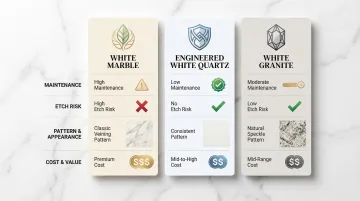
Takeaway: Your lifestyle matters as much as your style preferences. If your kitchen sees heavy daily use or you have young kids, quartz's zero-maintenance profile is hard to beat. If you want the real thing and can commit to care, marble rewards you with a look no engineered surface can fully replicate. Granite lands comfortably in between.
Hardware, Backsplash, and Accent Pairings That Complete the Look
Hardware Finishes
Hardware choice changes the entire character of your gray-and-white kitchen. Match your finish to your gray tone and desired style:
- Brushed Brass/Gold: Adds warmth and contrast against cool or dark gray cabinets. Perfect for farmhouse, transitional, and bold dramatic styles.
- Matte Black: Provides bold, modern contrast that conceals fingerprints. Ideal for contemporary and Scandinavian kitchens.
- Chrome/Brushed Nickel: Offers a cool, clean look that pairs naturally with gray tones. Works well in modern and coastal styles.
- Brushed Bronze: Earthy and transitional, this finish bridges traditional and contemporary aesthetics.
Once hardware is decided, the backsplash becomes your next lever. Because gray and white are neutral, it's the safest place to introduce visual interest:
Backsplash Ideas
- White Subway Tile with Dark Grout: Adds graphic texture and dimension while hiding stains in high-traffic areas. The grout lines create pattern without overwhelming.
- Marble Slab Extending from Countertop: 24% of homeowners now choose bold, continuous slab backsplashes that match countertops for a seamless, high-end look.
- Patterned or Geometric Tile in Gray and White: Creates an artistic focal point—think hexagons, zellige, or Moroccan patterns in complementary tones.
- Wood-Look or Open Shelving: Replaces upper tile backsplash entirely, introducing warmth and contrast through natural material.
Accent Elements: Wood, Black, and Color
Three accent categories consistently round out the gray-and-white palette:
- Warm wood — floors, open shelving, or a butcher block island prevent the kitchen from feeling cold. The organic texture balances the cooler tones.
- Black — faucets, lighting fixtures, and appliances add definition and visual weight, acting as a sharp third element that grounds the composition.
- A single color pop — navy, sage green, or terracotta introduced through bar stools, pendant lights, or décor personalizes the palette without breaking the neutral base.
Frequently Asked Questions
What color countertop goes best with gray cabinets?
White is the most versatile and popular choice, selected by 41% to 43% of renovating homeowners. White marble, quartz, and granite all pair beautifully—the specific white tone (bright vs. warm off-white) should align with the undertone of your gray cabinet.
What accent colors go with gray and white kitchens?
Warm metallics (brass, gold), natural wood tones, matte black, and soft color accents like navy, sage, or blush all complement the neutral base without overpowering it.
What color countertops are in for 2026?
Current trends favor warm white stone, quartzite, and textured surfaces like honed or leathered finishes over high-gloss. White countertops remain a timeless, on-trend choice that adapts to evolving styles.
Are white cabinets out of style in 2026?
White cabinets remain popular but wood cabinets (29%) have narrowly overtaken white cabinets (28%) as the top choice. Gray sits comfortably in the middle—lighter than the darker cabinet trend but richer than stark white, making it a practical and on-trend alternative.
What cabinet color goes with a gray countertop?
White and light wood cabinets both pair well with gray countertops. The key is maintaining enough contrast between the two surfaces—if your countertop runs cool gray, warmer wood tones or bright white cabinets prevent a flat, washed-out result.
Ready to bring your gray-and-white kitchen vision to life? Quality Made Cabinets has been crafting custom cabinets since 2010, helping homeowners create kitchens built to their exact style and functional needs. From gray cabinet profiles to finish coordination, our team handles every detail from design through installation. Contact us at (484) 719-8209 for a free in-home consultation and 3D design preview of your custom kitchen.