Introduction
A small kitchen painted white can feel twice its actual size. Light-colored surfaces carry high Light Reflectance Values (LRV), meaning they bounce both natural and artificial light around the room, softening shadows and visually pushing walls outward.
That effect matters most in tight spaces. A galley or U-shaped layout that feels cramped in charcoal or navy opens up considerably in white — no square footage added.
This post curates 27 of the most stunning small white kitchen designs, organized by style. You'll see how cabinet choice, hardware, and strategic accent colors transform identical square footage into farmhouse charm, modern minimalism, coastal breezes, or classic elegance—all anchored by the versatility of white.
TLDR
- White reflects light and makes walls recede visually, making small kitchens feel noticeably larger
- Cabinet style—shaker, flat-panel, or beadboard—is your biggest design decision
- Hardware, texture, and a single accent color keep white kitchens from feeling flat or clinical
- Custom cabinetry maximizes vertical storage and uses every inch of a compact layout
Why White Works So Well in Small Kitchens
White's dominance in small kitchen design isn't just aesthetic preference—it's physics. Lighter colors reflect both natural and artificial light, reducing the shadows that make rooms feel cramped. Designers measure this with Light Reflectance Value (LRV), a scale from 0 (pure black) to 100 (pure white). Popular whites like Benjamin Moore Simply White have an LRV of 89.52, while White Dove sits at 83.16. For small kitchen cabinets, an LRV between 55 and 85 maintains visual openness without glare.
An all-white or predominantly white palette creates visual continuity. When cabinets, walls, and countertops share similar tones, the eye doesn't stop at transitions—the room reads as one seamless volume. This trick is especially effective in galley and L-shaped kitchens where sightlines are short and choppy.
That continuity only works if you choose the right white for your light. Each tone behaves differently depending on which direction your windows face:
- Pure whites (bright, crisp) suit south-facing kitchens with warm, abundant natural light
- Warm whites (creamy, inviting) balance the cool, muted light of north-facing rooms
- Off-whites (softer, subtle) add warmth without reading yellow in either exposure
A cool white in a dim, north-facing kitchen can look clinical rather than bright. Always test samples under your actual lighting before committing.
Texture is what keeps an all-white kitchen from feeling flat. Contrast matte cabinet doors against glossy subway tile, honed marble against polished quartz, or painted shaker panels against smooth flat slabs. Strategic accent colors—navy island cabinetry, brass hardware, a patterned tile backsplash—add depth without breaking the palette.
27 Prettiest Small White Kitchen Ideas
Farmhouse and Cottage White Kitchens
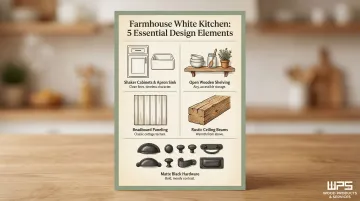
Farmhouse white kitchens thrive in small spaces because they balance charm with function:
- White shaker cabinets with apron-front sinks anchor the farmhouse look without overwhelming limited square footage
- Open wooden shelving reduces visual bulk while maintaining storage—floating shelves in reclaimed wood or light oak keep sightlines clear
- Beadboard paneling on cabinet doors or island sides adds texture without pattern chaos
- Rustic ceiling beams (real or faux) draw the eye upward, signaling height
- Vintage-inspired hardware in matte black or oil-rubbed bronze shifts white cabinets from generic to characterful
Instead of scattering small decorative accents, use one bold patterned tile backsplash as your focal point. Cement tiles in black-and-white geometric patterns or hand-painted Moroccan designs provide all the personality you need.
Pair with butcher block or soapstone countertops to add warmth against the white. Wood and stone anchor the palette, keeping it from feeling cold or sterile.
Modern and Minimalist White Kitchens
Modern white kitchens maximize spaciousness by removing hardware, handles, and visible seams:
- Handleless flat-panel cabinets in matte or gloss white create seamless horizontal lines
- Hidden panel-front appliances (refrigerators, dishwashers) maintain unbroken surfaces
- Integrated storage with touch-latch doors removes hardware entirely
- Seamless cooktops in white or light stone blend into counters
- Clean quartz or composite countertops with minimal veining extend the calm palette
The risk in small modern kitchens is feeling clinical. Layer in one material accent: light wood floors (white oak, birch), a warm-toned pendant light (brass, copper), or a single open shelf in natural walnut. One contrasting element is all you need — it anchors the space without introducing visual noise.
Coastal and Airy White Kitchens
Coastal kitchens pair white with soft blues and natural textures:
- White shaker or beadboard cabinets paired with seafoam or soft blue accents
- Mosaic tile backsplashes in white, pale aqua, or mother-of-pearl
- Natural woven barstools and jute rugs add organic texture
- Navy or blue island cabinetry as a color break in otherwise all-white kitchens
- Large windows or glass pendants that maximize natural light and ocean-inspired brightness
This palette works especially well in small kitchens with access to natural light. The blue-white combination looks spacious and fresh, with the cool tones visually receding to expand walls.
Classic and Traditional White Kitchens
Traditional white kitchens use detailed millwork to signal elegance:
- White cabinetry with crown molding and glass-front uppers showcase dishware and add vertical interest
- Marble countertops (Carrara, Calacatta) bring subtle veining and luxury
- Intricate trim details like fluted pilasters or decorative corbels
- Polished or antique brass hardware shifts the mood from farmhouse to formal
- Elegant pendant lighting (crystal, lantern-style, or mini chandeliers)
In small kitchens, traditional white works because detailed millwork draws the eye upward, making ceilings feel taller. The overall palette stays light and cohesive, so even ornate details register as intentional rather than busy.
Bold Accents and Statement Kitchens
Bold accents are easier to pull off in small white kitchens because the restrained palette gives each statement element room to breathe:
- Graphic or handmade tile backsplashes used as art—Moroccan zellige, Spanish encaustic, or Japanese shibori patterns
- Vibrantly colored portable islands in mint, sage, or cobalt that add function and personality
- Bold wallpaper in an adjacent nook or breakfast area (floral, geometric, botanical prints)
- Statement rugs as grounding elements—vintage Persian runners or bold striped kilims
- Retro appliances in contrasting finishes (Smeg fridges in pastel blue, red, or mint)
When the rest of the kitchen is quiet white, a single bold element becomes the focal point rather than competing with everything around it. Pick one — a colorful island or a patterned backsplash — and let it lead.
Design Principles That Make These Kitchens Work
Lighting: Layer It or Lose the Effect
Small white kitchens need layered lighting to keep the palette from feeling flat at night. The Illuminating Engineering Society recommends 40 footcandles for task areas and 15–20 for ambient lighting. A single overhead fixture creates what designers call the "Cave Effect"—bright center, shadowed perimeter—undercutting white's natural reflective advantage.
Layer three types:
- Ambient: Recessed ceiling lights or flush-mount fixtures
- Task: Under-cabinet LED strips or puck lights (chosen by 69% of renovators)
- Accent: Pendant lights over islands or sconces flanking open shelving
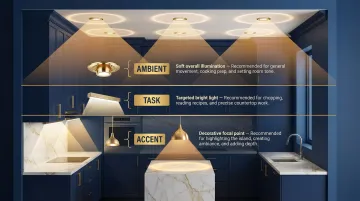
Good lighting reveals your kitchen's best features. What it reveals, though, depends on how well the storage is planned.
Storage That Hides the Chaos
The most beautiful small white kitchens hide clutter behind smart cabinet configurations. Floor-to-ceiling cabinetry, pull-out drawers, integrated appliance garages, and plate racks clear the counters—and cleared counters are what separates a kitchen that looks spacious from one that feels cramped. Extending cabinets to the ceiling increases storage by 30–40% compared to standard 36" uppers.
Smarter storage also opens the door to one of the most underused strategies in small kitchen design: going vertical.
Pull the Eye Upward
Most small kitchens waste the top third of the room. A few deliberate moves change that:
- Extend backsplash tile to the ceiling instead of stopping at the upper cabinets
- Stack cabinets to ceiling height (42" or custom-fitted to your ceiling line)
- Hang tall pendant lights that draw the gaze up
- Add crown molding to close the gap between cabinets and ceiling
Once the structure is right, hardware is where personality enters the picture.
Hardware: Small Detail, Big Shift
In a restrained white palette, every hardware decision is amplified. Brushed gold pulls shift cabinets toward glamorous; matte black reads modern farmhouse; unlacquered brass leans classic. Keep finishes consistent across the kitchen—mixing metals fractures the clean look white depends on. Bar pulls remain the dominant choice (74%), followed by knobs (37%).
The Cabinet Decision: Style, Storage, and Custom Craftsmanship
The single most impactful design decision in a small white kitchen is the cabinetry. Cabinet door style (shaker, flat-panel, beadboard, glass-front), finish quality, and interior organization determine both how the kitchen looks and how it functions daily.
Stock cabinetry often fails small kitchens because standard dimensions don't account for awkward layouts, low ceilings, or unusual corner configurations. In 2026, 46% of renovating homeowners chose custom cabinets, with another 33% choosing semi-custom—eliminating wasted space and filler panels.
That's where a custom cabinet maker makes the difference. Quality Made Cabinets, for example, starts with a free in-home consultation, precise measurements, and 3D design previews so you can visualize the layout before production begins. Each cabinet is built with plywood boxes, hardwood face frames, and soft-close drawer systems — construction details that hold up through years of daily use.
What to look for in a quality cabinet maker for a small white kitchen:
- Solid wood construction with durable finishes that resist moisture and yellowing
- Custom sizing to fit non-standard dimensions and awkward corners
- Interior organization options: pull-out drawers, appliance garages, plate racks, floor-to-ceiling configurations
- 12-month workmanship guarantee and post-installation support
- Full process from design consultation through installation
Quality Made Cabinets has been building custom cabinetry since 2010, with painted finishes, sustainably sourced materials, and a free post-installation check included with every project.
Small Kitchen Design Mistakes to Avoid
Even small white kitchens can fall flat with the wrong choices. Watch out for these three mistakes before your next renovation.
Overcrowding the Counter with Appliances and Décor
In a white kitchen especially, visual clutter is the enemy. Even beautiful objects compete for attention when stacked on limited counter space. Store countertop appliances in dedicated cabinet cubbies or pull-out shelves. Keep counters clear except for daily essentials.
Choosing the Wrong White Tone for the Light Conditions
A pure, blue-based white in a kitchen with limited natural light looks stark and cold. A warm-toned white in a sun-drenched space can appear yellowish. Test paint and cabinet swatches under your actual kitchen's lighting—morning, midday, and evening—before committing.
Skipping Under-Cabinet Lighting
Skipping under-cabinet lighting dramatically undercuts the effect of white cabinetry. Without task lighting under upper cabinets, countertops sit in shadow, making even the cleanest white kitchen feel dim and smaller than it is.
Conclusion
Small white kitchens are one of the most timeless and adaptable design choices available. Whether your goal is a bright farmhouse cottage, a sleek minimalist galley, or a coastal-inspired retreat, white provides a versatile base that can be personalized through cabinet style, hardware, accents, and layout.
If you're ready to move from inspiration to renovation, the cabinetry is the best place to start. Quality Made Cabinets builds fully custom white cabinetry sized and styled to fit your specific kitchen — every cabinet backed by a 12-month workmanship guarantee. Call (484) 719-8209 or stop by 4099 Commerce Dr, Green Lane, PA 18054 to schedule your free consultation.
Frequently Asked Questions
What are some small kitchen design mistakes to avoid?
The most common pitfalls include overcrowding counters with appliances, choosing the wrong shade of white for the room's natural light, skipping under-cabinet task lighting, and using too many competing accent colors that undercut the palette's sense of calm.
What color cabinets look best in a small kitchen?
White and off-white cabinets are consistently the top recommendation because they reflect light and maximize perceived space. Light gray, sage green, and soft blue are popular alternatives that still read as airy and open.
Are white cabinets out of style in 2026?
White cabinets are still one of the most requested choices in kitchen design. The style has evolved beyond flat all-white looks to include two-toned designs, warm whites paired with wood accents, and bold hardware finishes that keep the look current.
What is the kitchen work triangle?
The kitchen work triangle is a design principle stating that the refrigerator, sink, and stove should form a triangle to maximize workflow efficiency. In small kitchens, this rule is especially important to prevent a cramped layout from also being functionally frustrating.
How do I make my small white kitchen look bigger?
A few targeted changes make a noticeable difference:
- Use glossy cabinet finishes and glass tile backsplashes to bounce light
- Remove heavy window treatments to maximize natural light
- Run cabinetry to ceiling height to draw the eye upward
- Keep countertops clear to eliminate visual clutter
What countertop looks best with white cabinets in a small kitchen?
Top choices include:
- White marble or quartz for a seamless, spacious feel
- Light gray quartz for subtle contrast without visual disruption
- Butcher block for warmth and texture
Avoid very dark countertops in small kitchens — they absorb light and make the space feel heavier.