Introduction
Choosing the right paint finish for your kitchen cabinets can feel like an afterthought—most homeowners spend weeks selecting the perfect color only to realize they overlooked the finish until the roller is already loaded. Yet the sheen level you choose will determine how your cabinets wear, clean, and reflect light for the next decade or more.
Semi-gloss paint consistently earns top marks from professional painters and interior designers for kitchen cabinet use. It strikes a practical balance: durable enough to handle spills, steam, and constant handling, reflective enough to make colors pop, yet forgiving enough for most home environments without highlighting surface imperfections.
This guide breaks down exactly what semi-gloss looks like in practice, how it compares to satin and high-gloss alternatives, its real benefits and limitations, and step-by-step application tips. Whether you're tackling a DIY repaint or evaluating custom cabinet options, you'll leave with a clear framework for picking the finish that fits your kitchen's demands and your tolerance for upkeep.
TLDR
- Semi-gloss reflects 35–70% of light, creating a polished glow without the mirror finish of high-gloss
- Handles grease, steam, and heavy use better than satin — ideal for high-traffic kitchens
- Surface imperfections show more readily than with satin—thorough prep is essential
- Satin suits older cabinets or softer aesthetics where concealing flaws outweighs cleanability
- Prep and primer matter as much as the paint — don't skip either
What Is Semi-Gloss Paint and What Does It Look Like on Kitchen Cabinets?
Understanding the Sheen Spectrum
Semi-gloss sits in the middle-to-upper range of the paint sheen spectrum, falling between satin and high-gloss. The industry-standard progression runs: flat → matte → eggshell → satin → semi-gloss → gloss → high-gloss. Measured using ASTM D523 standards, semi-gloss finishes typically reflect 35-70% of light at a 60° angle, depending on the brand and formulation.
For context, Benjamin Moore Advance Semi-Gloss measures 50-60 Gloss Units while Sherwin-Williams Emerald Urethane Trim Enamel Semi-Gloss measures 55-70 GU.
What Semi-Gloss Actually Looks Like
Under natural daylight, semi-gloss produces a soft, clean glow on cabinet surfaces. The finish reflects light without creating harsh glare or mirror-like reflections. Unlike full-gloss acrylic, you won't see distinct object reflections. That controlled reflectivity makes semi-gloss work well across different lighting conditions.
Under task lighting or pendant fixtures, semi-gloss creates subtle shine that makes cabinet colors appear more vivid and defined. The effect varies by color:
- White and light gray cabinets look crisper and brighter, with a clean, finished quality
- Navy, black, or forest green — darker colors gain real depth, closer to a lacquered finish than flat paint can deliver
- Warm wood tones can show amplified grain texture (important if you're painting over stained wood)
The Cure-Time Reality
Don't judge your finish too early. Wet semi-gloss paint looks significantly shinier than the dried result. While the surface may feel dry to the touch within 4-6 hours, premium waterborne alkyds require up to 30 days to achieve full chemical cure and final hardness. The sheen mellows as it cures — avoid stacking items against cabinet doors or scrubbing the surface until that 30-day window has passed.
Semi-Gloss vs. Other Kitchen Cabinet Finishes: A Comparison
The Four Main Finish Options
Homeowners considering kitchen cabinet finishes typically evaluate four options: matte/flat, satin, semi-gloss, and high-gloss. The extremes—matte and high-gloss—present challenges that most professionals steer clients away from. Matte is too porous and absorbs grease easily, making it nearly impossible to clean without damaging the paint. High-gloss exposes every surface flaw and fingerprint while requiring near-perfect application.
Semi-Gloss vs. Satin
Satin finishes offer a softer, more subdued glow with 25-35% light reflectance. The lower sheen conceals surface imperfections better than semi-gloss, making it more forgiving on older cabinets with dents, scratches, or uneven surfaces. However, satin is slightly less moisture-resistant and harder to wipe clean than semi-gloss.
Semi-gloss wins on performance in high-use kitchens. It withstands repeated scrubbing, repels moisture more effectively, and holds up better to the wear of daily cabinet use. The trade-off: it demands better surface preparation and reveals flaws more readily.
Semi-Gloss vs. High-Gloss
Moving up the sheen spectrum, high-gloss provides maximum durability and the easiest cleaning — but its mirror-like surface amplifies every dent, brush stroke, and scratch. It's best reserved for flat-panel modern cabinet doors in homes with meticulous prep work. Semi-gloss provides near-equivalent durability with far more margin for imperfection, making it the more practical choice for most homeowners.
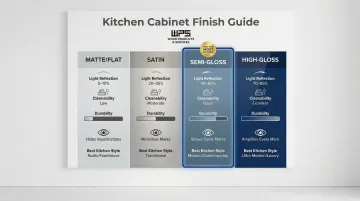
Finish Comparison Table
| Feature | Matte/Flat | Satin | Semi-Gloss | High-Gloss |
|---|---|---|---|---|
| Light Reflection | None to very low | Soft, diffused glow (25-35%) | Polished shine (35-70%) | Mirror-like (70-85%) |
| Cleanability | Difficult; absorbs grease | Easy to clean | Very easy; withstands scrubbing | Easiest to clean |
| Durability | Low | Medium-high | High | Highest |
| Flaw Visibility | Hides imperfections well | Conceals imperfections | Highlights surface flaws | Exposes all imperfections |
| Best Kitchen Style | Not recommended | Traditional, farmhouse, transitional | Most family kitchens | Ultra-modern, minimalist |
For most family kitchens—especially those with children, frequent cooking, or heavy daily use—semi-gloss hits the sweet spot. It's durable enough to handle real-world wear, forgiving enough for imperfect surfaces, and easy enough to clean that it won't become a maintenance headache.
Key Benefits of Semi-Gloss Paint for Kitchen Cabinets
Superior Durability and Moisture Resistance
Semi-gloss paint forms a harder, denser film than satin or matte once fully cured. This creates significantly better resistance to moisture, steam, grease splatter, and the repeated impact of cabinet doors opening and closing.
Industry testing standards require cabinets to withstand 25,000 open and close cycles under load without loss of functionality, representing years of daily use. Semi-gloss enamels are formulated to meet these requirements, maintaining their protective barrier against kitchen conditions that would break down softer finishes.
Easy Cleaning and Maintenance
The smooth, slightly non-porous surface of semi-gloss allows grease, food residue, and sticky fingerprints to wipe off with a damp cloth and mild soap rather than soaking into the paint film. That's a clear advantage over satin and matte finishes in kitchens where spills and splatter are inevitable.
KCMA testing standards also require cabinet finishes to withstand 24-hour exposure to common household substances without discoloration or blistering, including:
- Vinegar and grape juice
- Coffee and alcohol
- Detergent solutions
Semi-gloss handles all of these with ease.
Enhanced Color and Visual Impact
Semi-gloss sheen makes paint colors appear slightly more saturated and vivid compared to the same color in satin. This effect works to your advantage:
- Makes bold colors like navy or forest green feel richer and more premium
- Creates crisper, brighter whites that stand out
- Adds visual interest without pattern or texture
Light Reflection in Smaller Kitchens
The reflective quality of semi-gloss bounces both natural and artificial light around a kitchen, making the space feel slightly brighter and more open. This is especially useful in kitchens with limited windows, north-facing exposures, or inadequate lighting where every bit of reflected light improves the atmosphere.
When Semi-Gloss May Not Be the Right Choice
Imperfection Visibility
Semi-gloss is less forgiving than satin — that's the trade-off. Any surface flaw—dents, sanding scratches, brush strokes, uneven filler work—will be more visible under the shine. If your cabinet surfaces are rough, worn, or heavily textured (such as oak with open grain), satin or a grain-filler-then-semi-gloss approach is more appropriate.
The reflective quality that makes semi-gloss durable and cleanable also acts like a spotlight on substrate problems. Surface preparation becomes non-negotiable with this finish level.
Aesthetic and Style Mismatch
Semi-gloss can feel too sharp or clinical in kitchens designed around warmth and softness. Kitchens where satin or matte typically fits better include:
- Farmhouse and rustic styles with natural wood tones and aged hardware
- Scandinavian designs that rely on soft, textured surfaces
- Spaces with open shelving or reclaimed wood elements
- Kitchens with deliberately worn or distressed finishes elsewhere
In these settings, the polished sheen of semi-gloss competes with the aesthetic rather than supporting it.
Low-Traffic Considerations
Finish durability should match how hard your kitchen actually works. If the space sees minimal use—a vacation home, a rarely cooked-in kitchen, or an adult-only household with careful habits—the extra durability of semi-gloss may be unnecessary. In these situations, the softer, more elegant appearance of satin may be the better fit without sacrificing practical performance you don't actually need.
How to Apply Semi-Gloss Paint to Kitchen Cabinets
Surface Preparation Is Non-Negotiable
Because semi-gloss reveals imperfections, thorough prep is critical:
- Clean all surfaces with a degreaser to remove cooking oils and film
- Sand to scuff the existing finish (220-grit minimum) for proper adhesion
- Fill holes and dents with wood filler, allowing full cure time
- Sand smooth after filler dries, feathering edges into surrounding areas
- Remove all dust with tack cloth before priming
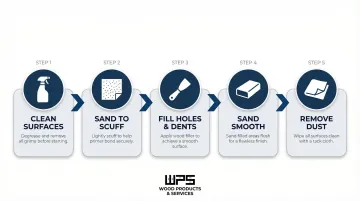
Skipping any of these steps will show in your final finish. The sheen acts as a quality amplifier—it makes good prep look great and poor prep look terrible.
Primer Selection and Application
A high-quality bonding primer is essential for semi-gloss to adhere correctly and produce uniform sheen. For slick or previously painted surfaces, use specialized urethane-acrylic bonding primers like Benjamin Moore Stix or Sherwin-Williams Extreme Bond, which chemically bond to non-porous surfaces with minimal sanding.
For raw wood or heavy stains, a shellac-based primer like Zinsser B-I-N permanently blocks tannin bleed. Apply primer in thin coats and sand lightly between coats with 220-grit or higher sandpaper for optimal smoothness.
Application Methods and Recommended Products
Three main methods exist for applying semi-gloss to cabinets:
- Airless sprayer — delivers the smoothest, factory-like finish with no brush marks; requires extensive masking and some practice to control overspray
- High-density foam roller — the best DIY option; apply with the roller, then immediately "tip off" with a quality brush dragged lightly in the direction of the grain
- Brush only — works for small projects or touch-ups, but visible brush strokes are hard to avoid without skilled technique
Professional-grade paints commonly recommended include:
- Sherwin-Williams Emerald Urethane Trim Enamel (semi-gloss)
- Benjamin Moore Advance (semi-gloss)
Both offer self-leveling properties and strong durability that hold up well in high-traffic kitchens. Their low-VOC formulations keep fumes manageable, and each coat should cure fully before the next is applied — typically 16–24 hours depending on conditions.
The Custom Cabinet Alternative
If the prep-prime-paint process feels like more than you want to take on, custom cabinets arrive with the finish work already done. Quality Made Cabinets uses 2K coating application — the same two-component system used in commercial finishing — on every cabinet they build. Each piece is properly prepped and finished before it reaches your kitchen, and the work is backed by a 12-month workmanship guarantee with a free post-installation check.
Maintaining Semi-Gloss Kitchen Cabinets
Routine Cleaning
Use the correct method to preserve your finish:
- Dampen a soft microfiber cloth with warm water and a small amount of mild dish soap
- Wipe cabinet surfaces gently, working with the grain direction
- Dry immediately after cleaning to prevent water streaking
- Clean spills promptly to prevent staining or damage
Avoid these cleaners:
- Abrasive sponges or scrub pads
- Steel wool
- Ammonia-based products
- Bleach or harsh chemical cleaners
These products break down the paint film and reduce sheen over time, shortening the life of your finish.
Timing matters just as much as product choice — especially on freshly painted surfaces.
Critical Wait Period
Newly painted cabinets require 14-30 days of full cure time before you can safely use water or liquid cleaners. During this period, use dry dusting only. Using liquid cleaners too early will permanently damage the uncured finish.
Touch-Up and Long-Term Care
Touch-ups are straightforward:
- Lightly sand the chipped area with 220-grit sandpaper
- Apply primer if bare wood is exposed
- Re-apply matching paint in thin coats, feathering edges into surrounding finish
- Allow full cure time before cleaning the area
Consistent light cleaning and prompt attention to spills significantly extends the life of a semi-gloss finish. Professionally prepped painted cabinets last 8-15 years before needing a full repaint, while improperly prepped DIY projects often fail within 3-5 years.
Frequently Asked Questions
Should I use semi-gloss paint on kitchen cabinets?
Semi-gloss is a strong choice for most kitchens due to its durability, moisture resistance, and cleanability. It works best when surfaces are properly prepared, as the reflective finish will highlight any substrate flaws or poor prep work.
Should kitchen cabinets be satin or semi-gloss?
Semi-gloss wins on durability and cleanability for busy, high-traffic kitchens. Satin suits softer aesthetics, cabinets with surface imperfections, or homeowners who prefer a more understated look.
What does semi-gloss look like on cabinets?
Semi-gloss creates a clean, polished glow—noticeably shinier than satin but without the mirror-like reflection of high-gloss. Colors appear more vivid and the surface reads as crisp and refined under both natural and artificial lighting.
What is the most durable finish for painted kitchen cabinets?
High-gloss is technically the hardest finish, but semi-gloss provides near-equivalent durability with much more forgiveness for surface flaws. That balance makes semi-gloss the more practical choice for most painted cabinets.
What paint do professionals use for kitchen cabinets?
Professionals typically use water-based alkyd or urethane-modified enamels in semi-gloss — Sherwin-Williams Emerald Urethane Trim Enamel and Benjamin Moore Advance are common choices. Both offer self-leveling properties and long-term durability that justify the premium price.
What is the most popular paint finish for kitchen cabinets?
Semi-gloss and satin lead the field. Semi-gloss is the traditional professional standard for high-traffic kitchens; satin has gained ground for its softer, modern look in transitional and contemporary designs.