Introduction
Many homeowners face a common dilemma when renovating: they want fresh painted kitchen cabinets, but worry their existing stained wood trim—window casings, door frames, crown molding—will clash and create a mismatched look. That combination isn't just workable—it's become one of the most sought-after kitchen aesthetics in recent renovation projects. In recent surveys, wood tones overtook white as the most popular cabinet color choice, with 29% of homeowners choosing wood finishes versus 28% for white. This guide covers how to read your existing stain, which paint colors work best, how to coordinate other wood elements, and pro tips for making the look feel intentional rather than accidental.
TLDR:
- Match undertones between your stain and paint—warm stains need warm-toned paints
- Keep contrast intentional: either closely tonal or dramatically different, never in-between
- Limit competing wood tones in the room to two or three maximum
- Test large paint swatches next to your trim in natural and artificial light
- Use satin or semi-gloss paint finishes for durability and subtle surface contrast
Why Painted Cabinets with Stained Wood Trim is a Smart Design Move
Mixing painted and stained finishes is a well-established interior design technique that creates visual depth and breaks up an all-wood kitchen that can feel heavy or dated. The National Kitchen & Bath Association's 2025 Kitchen Trends Report highlights "Mix and match" finishes as a core theme, with nearly a quarter (24%) of renovating homeowners choosing contrasting colors for upper and lower cabinets.
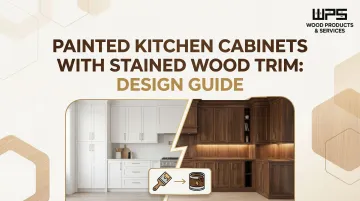
This approach lets the natural grain of your trim become a featured design element rather than background noise. The contrast needs to read as intentional: either a close tonal match where floor, trim, and cabinetry feel like one warm family, or a clear statement like crisp white against rich walnut. Combinations that land in between tend to look unplanned.
Core rules for success:
- Match undertones between stain and paint (warm with warm, cool with cool)
- Keep contrast intentional and clear
- Limit competing wood tones in the room to two or three
- Use stained trim as an accent, not the focal point
- Test colors in your actual kitchen lighting before committing
Understanding Your Wood Stain: The First Step to Getting the Look Right
The single most important factor before choosing a cabinet paint color is identifying the undertone of your stained wood trim. Every wood stain carries an underlying hue—typically warm (yellow, orange, red) or cool (gray, green).
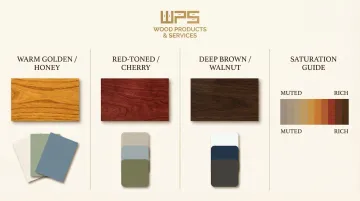
Warm Golden or Honey-Stained Trim
These tones carry yellow and orange undertones common in pine and natural oak. Paint colors with cool or stark undertones—pure bright white, icy blues—will fight this warmth. Instead, choose warm whites, creamy off-whites, soft sage greens, and muted warm blues that share a slightly golden or earthy base.
Red-Toned Stains
Cherry and red oak stains are the trickiest because the red-orange cast is strong. Simultaneous contrast explains why: a highly saturated, cool paint color placed next to warm wood amplifies that warmth, making the wood look intensely orange. Paint colors with green or gray undertones neutralize the red instead of fighting it:
- Warm greige — grounds the palette without competing
- Soft blue-gray — cools the overall tone naturally
- Medium-depth earthy green — balances without draining warmth
Skip bright whites with pink undertones, which intensify the red cast.
Deep Brown Stains
Walnut, espresso, and dark stains offer the most design flexibility because they function almost as neutrals. Both light and dark cabinet paint colors work—crisp white creates classic contrast, while navy, deep green, or charcoal creates a moody, sophisticated palette.
Stain Intensity Matters
A subtle, low-saturation stain allows more freedom with paint color. A very strong, saturated stain—heavy orange oak, bright cherry—needs the cabinet paint to work harder as a counterbalance, often requiring warmer, muted neutrals to compensate.
Best Paint Colors to Pair with Stained Wood Trim
White and Off-White
These are the most popular choices because their neutral base lets the stained trim become the design accent. The specific white matters enormously:
- Pure bright whites work best with cool-toned or gray-brown stains
- Warm off-whites (cream, linen, bone) complement golden, honey, or red-toned stains
Benjamin Moore's White Dove OC-17 is a warm, soft white with just a hint of warmth that bridges the gap between stark white and yellow, making it highly compatible with warm wood tones. Simply White OC-117 provides a bright, clean look while retaining enough warmth to prevent clashing with natural wood grain.
Soft Greens and Sage
Green is one of the most on-trend cabinet colors, with 76% of designers favoring it in 2025. It pairs exceptionally well with stained wood trim because the two tones are naturally complementary.
Lighter sages work with honey or medium-brown stains; deeper forest or olive greens suit dark walnut trim. The result feels grounded and cohesive without looking matchy.
Navy and Deep Blues
Deep blue is a strong, classic pairing with natural or dark wood trim because the colors are complementary—the blue reads as cool while the wood adds warmth. This combination is especially popular in transitional and coastal kitchen styles. Navy works best when the trim stain is medium-to-dark rather than very light or very orange-toned.
Greige and Warm Gray Neutrals
These mid-tone neutrals create a tonal, layered palette rather than a high-contrast one. They're a safe but sophisticated choice for kitchens where the stain is a dominant feature. The gray must lean warm—not cool blue-gray—to harmonize with most wood stains.
Colors to Approach with Caution
Very cool, stark colors can clash with warm wood stains by making the stain read more orange by contrast. Approach these with care:
- Icy blue-white or stark cool white
- Gray with strong blue undertones
- Bright, cool-toned greens
Stark contrast can work if it's intentional and dramatic. The problem is accidental contrast—where neither finish reads as dominant—which simply looks unresolved.
Coordinating Your Whole Kitchen: Islands, Floors, and Trim Details
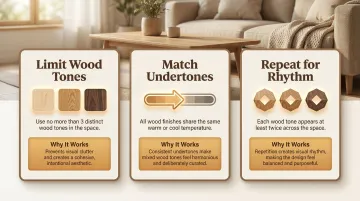
Many kitchens have multiple wood elements beyond just the trim—wood floors, a wood island, exposed beams, or open shelving. The general rule is to limit competing wood tones to one or two, ideally having the floor and trim read as the same wood family while the island or shelving provides contrast.
The Kitchen Island Strategy
A popular approach is leaving the island in stained wood (matching or complementing the trim) while painting the perimeter cabinets—this creates a furniture-piece effect that grounds the space. The other direction: paint the island an accent color while keeping the perimeter cabinets in a neutral painted finish. Either way, 24% of renovating homeowners are choosing this two-tone approach.
Beyond the island, how you handle your trim also shapes the finished look.
Should You Paint the Trim?
Most homeowners get the best results leaving stained trim as-is—just choose a cabinet paint color that respects the trim's undertone. Here's how the main options compare:
- Leave trim stained: Preserves the mixed-finish aesthetic; requires careful paint color selection
- Paint trim to match cabinets: Creates a seamless, unified look but removes the contrast that defines this style
- Paint baseboards to match walls: Keeps the design layered; the most common and versatile approach
Coordination Rules
| Principle | Application | Why It Works |
|---|---|---|
| Limit wood tones | Maximum of three distinct wood tones in the space | Prevents a cluttered, mismatched aesthetic |
| Match undertones | All wood finishes share consistent temperature (warm or cool) | Creates subtle continuity despite varying depths |
| Repeat for rhythm | Each wood tone appears at least twice | Reinforces balance and makes nothing look accidental |
Design Styles That Nail the Painted Cabinets and Stained Trim Look
Traditional and Farmhouse Kitchens
Warm off-white or cream painted cabinets against golden oak or warm walnut trim define the quintessential farmhouse look. The key design elements that pull this style together:
- Shaker-style cabinet doors for texture and depth
- Brass or oil-rubbed bronze hardware to connect painted and stained surfaces
- Warm wood tones (honey oak, pecan) rather than cool or gray-tinted stains
The result feels layered and lived-in — like the kitchen has always belonged there.
Modern Transitional Kitchens
This style favors cleaner contrast — crisp white or soft greige painted cabinets against refined, medium-toned wood trim like natural oak or light walnut. Flat-front or simple shaker cabinet styles work best, and the result reads as updated and sophisticated. Satin nickel or warm brass hardware bridges traditional warmth with contemporary sleekness.
Bold and Eclectic Kitchens
For homeowners who want personality, pairing a saturated cabinet color — deep green, navy, terracotta — with dark stained trim creates a high-design, editorial look. Choose a trim stain in deep brown or espresso — lighter, orange-toned woods will clash rather than contrast. Matte black or polished chrome hardware sharpens the overall look without softening the drama.
Tips for a Polished, Intentional Finish
Test in Your Actual Kitchen Lighting
The single biggest mistake is choosing a paint color in isolation without placing a sample next to the actual stained trim in your kitchen's specific lighting. Benjamin Moore emphasizes the necessity of observing paint samples in every lighting condition—natural daylight and artificial evening light—to confirm the colors work together before committing. Test large paint swatches (at least 12x12 inches) directly adjacent to the trim at different times of day.
Choose the Right Paint Finish
For kitchen cabinets adjacent to stained wood trim, opt for a satin or semi-gloss finish. Both are durable, wipeable, and provide just enough sheen to differentiate the painted surface from the matte texture of stained wood—creating subtle but effective contrast in surface quality, not just color. Avoid flat or eggshell on cabinet doors.
Consider Custom-Built Solutions
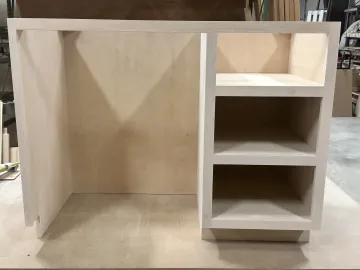
For homeowners starting a kitchen renovation from scratch, custom-built painted cabinets give you the most control over how the finished look coordinates with existing stained trim. Quality Made Cabinets builds custom kitchen cabinetry where the paint finish, door style, and proportions are tailored to your specific space—including a 3D design preview before production begins.
Their process covers every stage of getting the finish right:
- Free in-home consultations and precise measurements
- Finish sampling so you can confirm undertone compatibility in your actual kitchen
- Professional surface preparation and durable 2K coating application
- 12-month workmanship guarantee and free post-installation check
Frequently Asked Questions
Can you mix wood and painted cabinets?
Yes — and it's one of the most popular approaches in kitchen design right now. Make the contrast look intentional by going either closely tonal or dramatically different, and choose paint colors whose undertones complement rather than fight the wood stain.
Should baseboards be the same color as cabinets?
Baseboards don't need to match cabinets. In most kitchens with stained wood trim, they're painted to match the wall color or surrounding trim — not the cabinet color — which keeps the overall design layered and grounded.
What cabinet color is outdated?
Very cool gray cabinets — the dominant look of the early 2010s — have faded, and so has honey oak used as the only finish throughout a kitchen. Today's kitchens lean toward warmer whites, earthy greens, navies, and mixed-finish combinations that pair painted and stained elements.
What paint finish is best for kitchen cabinets next to stained wood trim?
Go with satin or semi-gloss for painted kitchen cabinets. Both finishes hold up well to cleaning, and their subtle sheen creates just enough contrast with the matte texture of stained wood to define each surface cleanly.
Should my painted cabinet color match my stained wood floor?
The cabinet paint color does not need to match the floor, but it should share complementary undertones. A warm honey oak floor pairs best with warm-toned paints like creams and soft greens, while a cool gray-toned floor allows for cooler cabinet paint choices.